White Deer Plain
Overview
White Deer Plain (Bai Lu Yuan) is a critically acclaimed novel written by the late Chinese writer Chen Zhongshi. Set in northwestern Shaanxi province, the story unfolds over several decades between the fall of the Qing Dynasty (1644-1911) and the 1970s. The novel chronicles the lives and struggles of two farming families, the Bai and the Lu, showcasing their experiences and challenges amidst the backdrop of significant historical changes.
Published in 1993, White Deer Plain was awarded China's prestigious Mao Dun Literature Prize and has been praised as an essential read for anyone seeking a deeper understanding of Chinese society and history. The novel's vivid portrayal of rural life and its profound insights into the human condition have cemented its status as a classic in Chinese literature.
Adaptations
Stage and Film
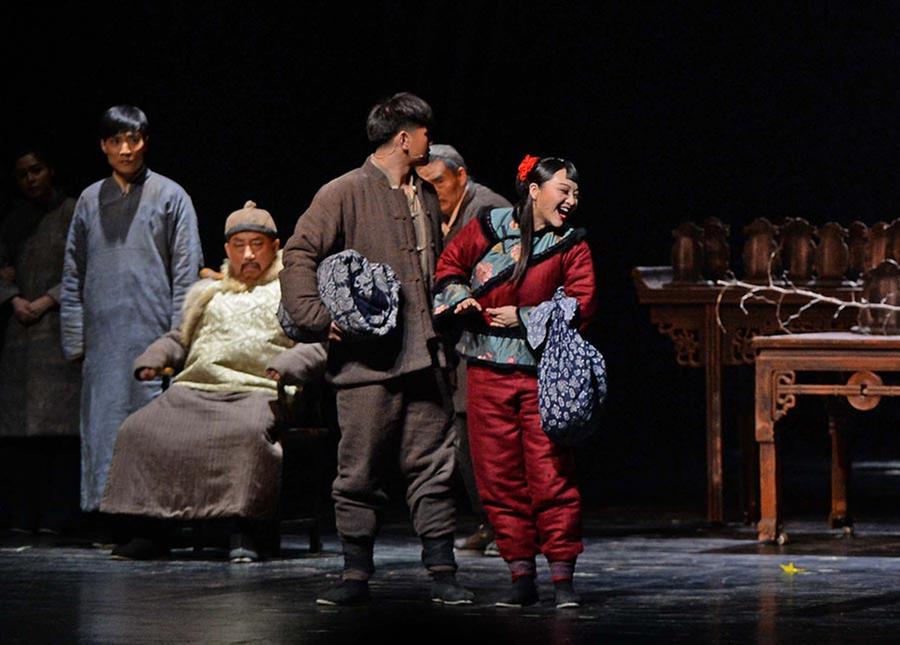
The novel's depth and complexity have inspired several adaptations across different media, including stage and film. One of the most notable adaptations is the stage play produced by the Shaanxi People's Art Theater, which premiered in 2006. Playwright Meng Bing adapted the novel for the theater, and the play has been lauded for its faithful representation of the novel's themes and its powerful performances.
The Shaanxi People's Art Theater's rendition of White Deer Plain features stunning stage sets that authentically reflect Shaanxi's societal and cultural landscape. The production incorporates music inspired by the traditional Qinqiang Opera, further enhancing the play's cultural resonance.
Additionally, a film adaptation directed by Wang Quan'an was released, earning international recognition by winning the Silver Bear for Best Cinematography at the 2012 Berlin Film Festival. The film's visual storytelling and cinematography capture the essence of the novel's rich narrative.
Impact and Significance
White Deer Plain is more than just a literary masterpiece; it is a cultural artifact that offers insights into the evolution of Chinese society. The novel's exploration of familial duty, societal changes, and individual aspirations resonates with readers, providing a nuanced understanding of the socio-political dynamics of the era it depicts.
Author's Legacy
Chen Zhongshi, the author of White Deer Plain, was born in 1942 in Xi'an, the provincial capital of Shaanxi. His literary career began with prose writing in 1965, and he achieved widespread acclaim with the publication of White Deer Plain in 1993. Chen's work is celebrated for its realistic depiction of Chinese contemporary history and his ability to weave intricate narratives that reflect the human experience. Chen's literary contributions have left a lasting impact on Chinese literature, inspiring future generations of writers and artists.
Theatrical Tours and Reception
The Shaanxi People's Art Theater's production of White Deer Plain has toured extensively across China, performing in major cities such as Beijing, Guangzhou, Shenzhen, Nanjing, and Shanghai. The play has been met with critical acclaim, with theater-goers and critics praising its authenticity and the powerful performances of its cast. The production has been described as "the best play of 2016" by Chinese theater critic Li Longyin, highlighting the Shaanxi People's Art Theater's ability to bring the novel's characters and themes to life on stage.
The adaptation's success is attributed to the close collaboration between playwright Meng Bing and the theater company, as well as the involvement of local actors who speak the Shaanxi dialect, adding to the play's authenticity. The stage sets, designed by Huang Kaifu, draw inspiration from Qing-era architecture, further enhancing the production's visual appeal and historical accuracy.
Challenges in Adaptation
Adapting White Deer Plain from a novel of over 500,000 words into a three-hour play posed significant challenges for playwright Meng Bing. The process involved meticulous planning and collaboration with the novel's author, Chen Zhongshi, to ensure that the essence of the story and its characters were preserved. Meng's dedication to capturing the novel's themes and character dynamics is evident in the play's reception and its ability to resonate with audiences.
In his adaptation process, Meng spent time in the countryside of Shaanxi, immersing himself in the local culture and lifestyle to better understand the connection between the land and its people. This experience allowed him to bring authenticity and depth to the characters and their interactions on stage.
Cultural and Historical Context
White Deer Plain is deeply rooted in the cultural and historical context of Shaanxi province. The novel and its adaptations explore themes of tradition, change, and resilience, reflecting the broader socio-political transformations occurring in China during the early 20th century. The story highlights the tension between old and new, as the characters navigate personal and societal upheavals.
The novel's exploration of rural life in Shaanxi provides a window into the cultural identity and values of the region. The use of local dialects, traditional music, and authentic stage designs in the play further underscore the significance of preserving cultural heritage while engaging with contemporary issues. Article reference1. Celebrated drama to present its 2021 final tour. chinaservicesinfo.com. 20212. Epic Chinese fiction takes the spotlight on stage. chinadaily.com.cn. 20183. Play aims to give audiences a taste of farm life in Shaanxi. chinadaily.com.cn. 2017Photo Gallery(6 pictures)CategoriesLiteratureTagModern and Contemporary LiteratureChinese Modern LiteratureFilm and TVRelated11 stage plays that set the seal on Renyi's reputationCatalogue1. Overview2. Adaptations3. Impact and Significance4. Author's Legacy5. Theatrical Tours and Reception6. Challenges in Adaptation7. Cultural and Historical Context- - - []








